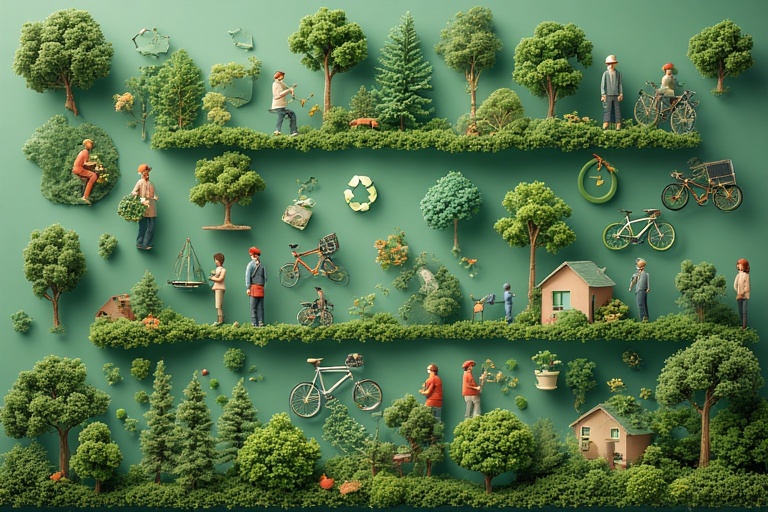

In 2025 it’s all about an easy green life; the planet’s need to be saved is greater than ever—but it doesn’t have to cost an arm and a leg. Most environmentally friendly lifestyle changes, in fact, are not only gentle on the earth, but they can also save you money in the long term. From energy-efficient home upgrades to easy shopping practices, small changes in everyday life can add up.

What the Experts Are Saying?
An Institute for Energy Economics and Financial Analysis (IEEFA) July 2025 report found that Australian households can save 82–94% on their electricity bills by installing smart energy upgrades such as heat pumps, home batteries, and solar panels. Similar results in the UK show that households with efficient appliances and good insulation save hundreds of pounds a year in bills.
Shoppers are concerned with sustainability. Energy-efficient lighting, low-flow showerheads and faucets, and smart thermostats are now at the forefront of renters’ wish lists—putting them on landlords’ lists as cost-saving upgrades, according to Smart Rent’s 2025 rental trends.
Climate Works Centre’s Dr. Gill Armstrong notes that green swaps are “low-hanging fruit” with quick financial payback and high environmental gain. The message is simple: you don’t have to make a radical lifestyle shift—merely a few sunny swaps. This will totally make your life just an Easy green life.
Convenient Green Switches to Make Today
Let’s break down some of the easiest and greatest eco-life adjustments that save you cash and reduce your impact on the environment:
Home Energy Efficiency
Energy-efficient homes are not only more comfortable and less expensive to run and better for the environment, but also you don’t have to go totally off the grid to save money.

Switch to LED lighting: They use 80–90% less energy and last 10 times longer than incandescent bulbs.
Seal cracks and insulate your home: Preventing air leaks can save heating and cooling energy up to 25%.
Install smart thermostats: These allow you to better control energy usage, lowering energy bills.
In most of the world, governments and utilities already offer rebates for energy-efficient appliances and upgrades—making these investments profitable in the long run and making your life an easy green life.
Water-Saving Solutions
Freshwater is a scarce resource, and increasing water bills are being seen all over the globe. Voluntary changes will save water and dollars on the bill.

- Replace showerheads with low flow.
- Fix leaky faucets and toilets to avoid water loss.
- Install a dual flush system on toilets for increased efficiency.
- Use a dishwasher rather than hand washing—new machines are fully automatic and use less water.
These small adjustments alone save homeowners thousands of gallons of water annually—saving your wallet and the planet.
Shopping and eating culture
Our shopping behavior affects the environment and our wallets by a significant amount. By being slightly planned, you can shop more wisely, cut down on waste, and save money.

- Rather than fast fashion or disposable goods, choose:
- Reusable bags are used for shopping, beeswax wraps, and cloth napkins.
- Bulk purchases and refill shops to cut back on packaging and save dollars.
- Second-hand items, especially clothing and electronics—lower price with less waste.
- Meal planning and using leftovers to avoid food waste, which can save the typical family hundreds of dollars annually.
By consuming more plant-based dishes and cutting down on meat, not only are you lowering your carbon footprint, but you are also lowering food costs substantially in the long run.
Transport & Travel
Modifying your travel habits may be the greatest step that you can take.

- Use public transport or carpool whenever possible.
- Walk or cycle for short trips—good for you and the planet.
- If you are driving daily, consider shifting to an electric vehicle or bicycle, which is fuel and maintenance cost-saving in the long term.
Some insurers even offer green driving discounts for rewarding eco-friendly choices.
Renewable Energy at Home
Solar panels, once deemed to be expensive, now cost less than ever. Governments of all countries provide government incentives so that more and more people use solar and battery systems.

Households that have solar panels and battery storage, as per a recent Australian study, save as much as 90% on their electricity bills. Even if one is renting, one can opt for green energy supply firms that invest in renewable energy sources. (#Easy green life)
Other low-budget options are
- Installing solar-powered lights along your driveway or garden.
- Utilizing solar chargers for mini phones.
- Replacing appliances with energy-efficient appliances with a high Energy Star rating.
Going Green: Financial Benefits
Green behaviors are not only environmentally friendly—they’re cost-effective. Here’s why green choices pay off financially:
Save on utility bills through water and energy efficiency.
Fewer replacements due to long-lasting, recyclable products.

Cut transport and fuel expenses with greener commutes to enjoy an easy green life.
Fewer medical bills as a result of cleaner air and healthier lifestyles.
Increased value of property for energy-efficient and green-certified homes.
Mindful Living = Long-Term Benefits
It is a journey, not a sprint. Start with something small and something you can do right now, and then gradually add more. Every change you make brings you closer to the better world—not just ecologically, but also economically.
Following is a short checklist to help you begin:
- Replace current light bulbs with LEDs
- Install low-flow showerheads and faucet aerators
- Bring reusable bags and bottles
- Cycle or use public transport once a week
- Plan meals to avoid food wastage
- Switch to eco-cleaning products
Investing in solar or alternative energy sources will get you another step closer to your goal of achieving an easy green life.
Change comes from actions:
Sustainable living isn’t supposed to be perfect—it can simply be. In 2025, the transitions to living sustainably are easier, more intelligent, and less expensive than ever. If you’re a homeowner, renter, student, or business owner, there’s always something you can do. These buys not only reduce your carbon footprint, but they also save you money and support healthier, more aware living. Yes! To obtain an easy green life, you’ve got to perform some of the solutions mentioned above, and I know you can’t do it. The time is now to do good—and the reward is well worth it.
FAQs
1. What are the easiest green living changes that I could make starting in 2025?
Tiny steps such as the use of less plastic, saving fuel, recycling, saving water, and growing trees are little green shifts that one can take right away.
2. Do little green steps lead to a large impact?
Yes. When millions of people make little green habits, the effect is massive. Every single step, whether reusing bags or composting, saves the planet.
3. Ways Going Green Can Cut Costs for You?
Green habits like using energy-efficient appliances, switching to LED lights, cutting food waste, and conserving water reduce bills while protecting the environment.
4. How can I make some green swaps at home?
Give reusable bottles a go, green kitchen switches, solar panels, organic domestic cleansers, and natural clothing. They are simple substitutions that make homes greener and healthier.
Don’t forget to view my blog on how we are destroying our planet by everyday actions, and if possible, try to reduce the damage we cause to our planet.(Climate Change: Destruction’s on the Way)



Pingback: The future of the Earth in 2050 is super bad.
Pingback: Climate Change: A Dangerous Future of Destruction
Pingback: The Essential Role of Climate change towards a better 2025