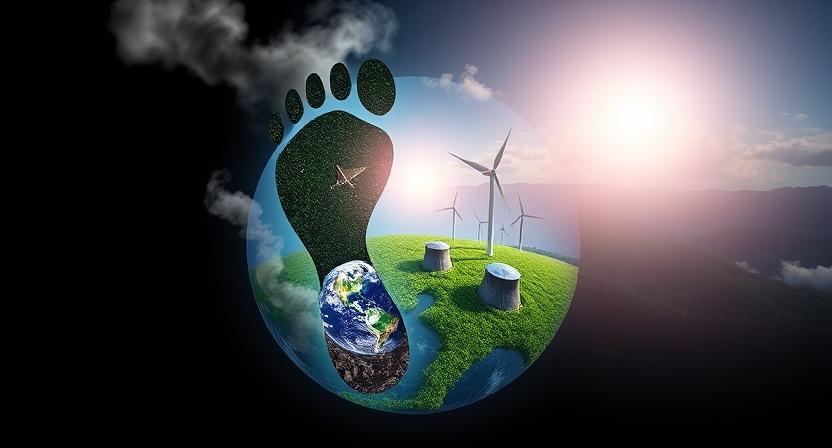

In recent years, the impact of human activity on the environment has become impossible to ignore. From historic heatwaves in India to devastating wildfires in Canada and flash floods in the UAE, climate-related disasters are becoming more frequent and intense. At the center of this crisis lies one common factor: rising greenhouse gas emissions driven by everyday actions. These emissions form what is known as a carbon footprint, and understanding how to reduce it is crucial in the fight against climate change.
What Does Carbon Footprint Really Mean?
A carbon footprint is the total amount of greenhouse gases, mainly carbon dioxide (CO₂), that are released into the atmosphere as a result of an individual’s or organization’s activities. These gases are emitted from activities such as driving cars, heating homes, manufacturing goods, flying, producing food, and more. The footprint is measured in metric tons of carbon dioxide equivalents (tCO₂e), and the larger the footprint, the greater the contribution to global warming.

Carbon Footprint
Every action, no matter how small, has an environmental cost. From ordering a product online to using hot water, the energy required for these tasks often comes from burning fossil fuels. This, in turn, releases CO₂ and other gases that trap heat in the atmosphere.
Why It’s Especially Important in 2025
According to the Intergovernmental Panel on Climate Change (IPCC), the world needs to reduce global emissions by at least 45% by 2030 to limit warming to 1.5°C and prevent irreversible environmental damage. With global emissions still climbing, individual choices are now as critical as policy-level action.

As of 2025, the global average carbon footprint stands at about 4.5 tons per person per year. In contrast, sustainable living models suggest that each individual should aim to keep their footprint under 2 tons annually to maintain ecological balance.
Recent Developments and Climate Commitments
In December 2024, world leaders gathered at COP29 in Dubai to accelerate climate action. More than 130 countries agreed to triple renewable energy generation and begin phasing out coal usage. Meanwhile, leading corporations like Apple and Google have committed to running on 100% clean energy across their global operations within the next few years. While these steps are commendable, experts agree that large-scale change won’t be possible without collective shifts in personal behavior.
Effective Ways to Reduce Your Carbon Footprint
Even the smallest adjustments to daily life can lead to significant reductions in greenhouse gas emissions. The following are proven methods to cut personal carbon output.
Change How You Travel
Transportation is one of the largest contributors to individual carbon footprints. Private vehicles emit large amounts of CO₂, especially in urban areas. Choosing to walk, bike, or use public transport reduces emissions drastically. For longer distances, carpooling or opting for electric or hybrid vehicles can cut down fuel consumption and emissions significantly. Avoiding unnecessary short flights and embracing rail travel where possible also contributes to cleaner air.
Conserve Energy at Home
Household energy use is another key source of emissions, especially in homes powered by non-renewable energy. Switching to LED lighting, turning off devices when not in use, and using smart thermostats to manage heating and cooling can make a big difference. In areas where it’s feasible, installing solar panels or sourcing green energy from the grid can dramatically lower emissions over time.
Shift Toward Plant-Based Eating
Animal agriculture is a leading source of methane, a greenhouse gas far more potent than CO₂ in the short term. Reducing meat and dairy consumption, even a few times a week, can shrink your carbon footprint significantly. Plant-based diets require fewer natural resources like water and land and emit far less greenhouse gas during production. Choosing local, organic produce further enhances your environmental impact.
Shop Mindfully
Consumerism drives industrial production, packaging waste, and logistics emissions. Choosing quality over quantity and buying secondhand or locally made products reduces waste and supports sustainable practices. Avoiding fast fashion and instead investing in long-lasting clothing made from organic or recycled materials is another powerful step toward sustainability.
Recycle and Reuse
Landfills emit methane gas as organic and plastic waste break down. Recycling materials like paper, metal, and plastic keeps them out of landfills and reduces the energy needed to produce new products. Reusing household items and donating instead of discarding helps reduce unnecessary waste and conserve resources.
Use Water Efficiently
Water usage often goes unnoticed, yet it requires significant energy to treat, pump, and heat. Simple practices like turning off taps while brushing teeth, fixing leaks, using low-flow showerheads, and running full laundry loads can save hundreds of gallons per month and reduce energy use.
Switch to Eco-Friendly Products
Many commercial cleaning and cosmetic products contain chemicals that are harmful to both humans and aquatic life. Switching to biodegradable, non-toxic cleaning supplies and personal care products limits pollution and supports safer production methods. Choosing items with minimal or no plastic packaging further reduces waste.
Rethink Air Travel
A single international flight can emit over a ton of CO₂ per passenger. Reducing air travel is one of the fastest ways to lower your annual footprint. Where flights are necessary, choosing nonstop routes and offsetting emissions by supporting verified carbon offset programs, such as those from Gold Standard or Terrapass, helps counterbalance the impact.
You can also visit my other blog, Top 5 Indoor Plants That Purify Indoor Air (NASA-Approved). You should really read that to make your environment better.

Support Tree Planting and Reforestation
Trees naturally absorb CO₂ from the air, making forests some of our most effective climate tools. Supporting organizations like Team Trees or the Trillion Trees initiative ensures more green cover, restores biodiversity, and helps reverse the effects of deforestation.
Advocate and Educate
Change accelerates when people are informed and empowered. Talking about climate issues, supporting environmental policies, and participating in awareness campaigns can drive both individual and collective action. Grassroots movements like Fridays for Future and The Climate Reality Project continue to grow in influence, largely due to community engagement.
Measuring and Managing Your Footprint
There are several reliable tools available to help estimate and track personal emissions.
The climate crisis may seem overwhelming, but its solution lies in millions of small, consistent changes made by people worldwide. Your carbon footprint is not just a number—it’s a reflection of your choices and their impact on the planet. With awareness and intention, anyone can lower their footprint and play a part in building a more sustainable, resilient future.
Recent Finding in 2025
Every person’s carbon footprint counts more than ever, and new data shows why. In 2025, global fossil-fuel CO₂ emissions are set to rise to about 38.1 billion tonnes and will mark a new record, thanks to ongoing dependence on coal, oil, and gas.
Meanwhile, natural systems that once helped absorb carbon-forests and oceans-are weakening: a recent study found that during the 2023-2024 period-an El Niño-linked drought-the global land “carbon sink” dropped sharply, causing a record-high increase in atmospheric CO₂ levels.
These growing emissions have real-life consequences: since 1995, climate-related disasters-floods, storms, heatwaves-have taken over 832,000 lives and caused about US$4.5 trillion in economic damage globally.
In 2025 alone, extreme weather events throughout Asia displaced millions, destroyed homes, and reminded us that climate change is no longer a distant threat, but it’s here and now.
But all is not lost. Scientists warn that with action now — from the societal to personal level — we might still have an opportunity to slow down warming. Reduce emissions, protect and restore forests, adopt clean energy, cut waste, choose low-carbon lifestyles, and our burden could dramatically reduce. What you do as an individual — how you travel, what you buy, how you consume energy — adds up.
It means that you, the reader, are a source of promise: with small but meaningful changes today, you can aid in turning the tide, protecting vulnerable communities, reducing climate disasters, and helping to preserve a livable planet for tomorrow.
FAQs
Define a carbon footprint in simple terms?
Carbon footprint refers to the cumulative quantity of greenhouse gases, say carbon dioxide, that an individual, an item, or an activity deposits into the air. It is one measure of how we are hurting the Earth.
Why is lower carbon footprint relevant for us in 2025?
Lowering our carbon footprint is important in 2025 since climate change is gaining speed. Reducing emissions slows down global warming, preserves natural resources, and ensures a healthier tomorrow for the next generation.
What are the easiest ways to reduce my carbon footprint at home?
Easy changes such as installing energy-efficient devices, switching to green energy, minimizing waste on a plate, cycling or walking to save fuel, and refraining from single-use plastics greatly reduce your carbon footprint.
How would my diet impact my carbon footprint?
One of the leading causes for pollution is the production of foods. Consuming more vegetarian foods, less meat and milk, and promoting locally and naturally grown produce significantly diminishes your pollution effect.
Does a small modification necessarily contribute to the level of emissions?
Yes, totally! Small changes each day, when multiplied by millions of people, end up making a big impact. Shifting to reusable bags, switching off electricity, or growing a tree adds up to meaningful action on climate.