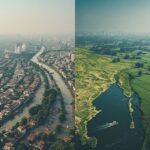

If trends persist, by 2050 the world will be fundamentally changed—characterized by cataclysmic weather, environmental collapse, migration, and human desperation. Specialists predict we’re headed for irreparable damage unless action is taken right away. Get an up-close look at what’s in store—and why there’s still a chance for hope if we act now. The future of the earth in 2050 is super bad, which we are going to discuss in the following article.
1. Heat waves & Wildfires: A Blazing Reality
Europe & Beyond: Early Warning
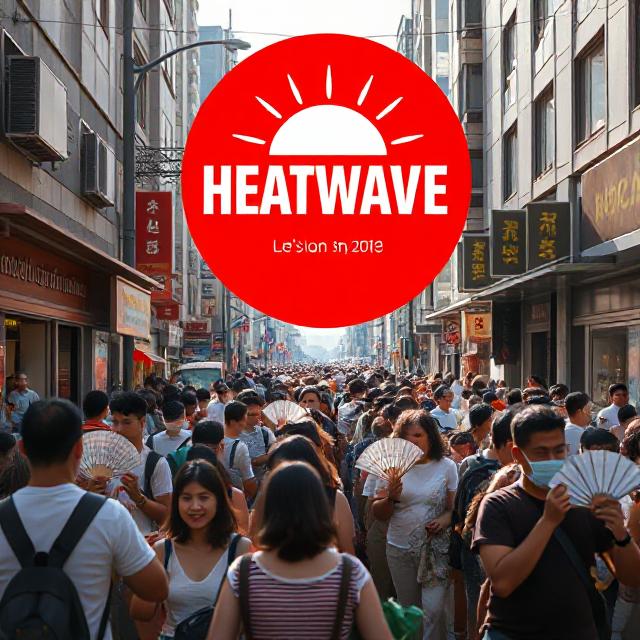
Southern Europe set all-time record heat in June 2025—Spain hit 46°C, sending Italy, France, and Turkey heat warnings with evacuations and blazes.

Scientists link these incidents to human-induced climate change and warn that Europe is warming twice as fast as the global average.
Looking Ahead to 2050
The IPCC is cautioning that a rise in global warming by 0.5°C greatly enhances the occurrence and intensity of heat waves, droughts, and wildfires. The first reason why the future of the earth is bad!
Models foresee a possible +4°C average rise by the turn of the century on a “business as usual” path. The future of the Earth in 2050 is going to be really unexpected and a disaster.
2. Sea Level Rise and Coastal Collapse
The Warning Signs
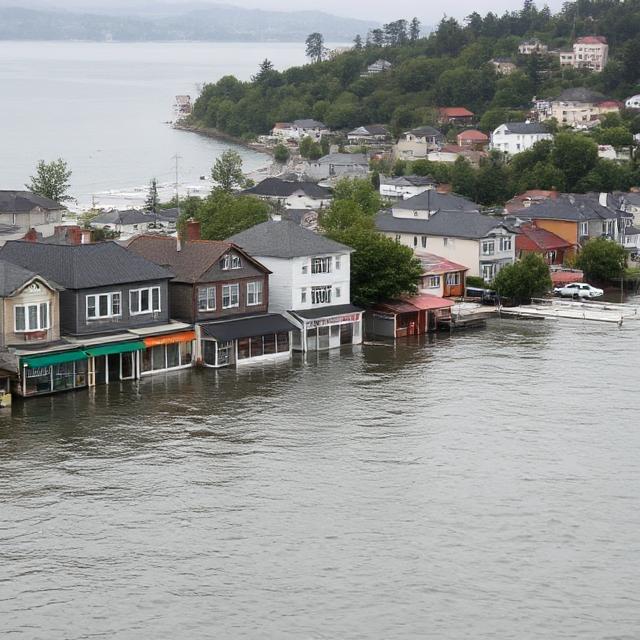
By 2050, a mere 20 cm rise would inundate coastal cities, costing $1 trillion annually in the world’s top 136 coastal metros.
Researchers estimate that tens of millions will need to be displaced by mid-century, even if warming is limited to 1.5°C.
The Human Cost
As many as 150–200 million people will be displaced internally by 2050 due to sea-level rise, drought, and weather extremes.
Coastal freshwater resources—such as the Nile, Mekong, and Ganges Rivers—will be affected by saltwater intrusion, endangering agriculture and drinking water supply.
3. Severe Weather & Health Crises
Global Temperature Projections
The WMO puts a 70% probability on the global mean temperature in 2025–29 rising above 1.5°C above pre-industrial levels.

IPCC scenarios warn that each additional warming makes heat waves, heavy precipitation, drought, and tropical cyclones more severe.
Health Impacts
For 2030–2050, the WHO estimates 250,000 more climate-related deaths from undernutrition, malaria, diarrhea, and heat stress each year.
177–246 million older adults will be exposed to potentially life-threatening heat in 2050—mainly in Asia and Africa.
4. Scenarios for Global Warming: Five Futures
IPCC AR6 presents five possible climate futures:
1. SSP1-1.9 (~1.5°C): CO₂ net-zero by 2050—very optimistic, but requires radical systemic shifts.
2. SSP1-2.6 (~1.8 °C): Strong mitigation; more gradual net-zero.
3. SSP2-4.5 (~2.7°C): Business-as-usual, with limited mitigation.
4. SSP3-7.0 (~3.6°C): High emissions, climate fragmentation.
5. SSP5-8.5 (~4.4°C): Growth based on fossil fuels—unfavorable trajectory.

Without major action, we’re heading for SSP2 or worse—potential warming far beyond safe thresholds.
5. Tipping Points & Global Consequences
Arctic Meltdown
The Arctic is warming ~3–4× faster than the rest of the planet.
Melting of Greenland ice and thawing of permafrost are irreversible and lead to global warming by inducing greenhouse gas emission.

AMOC Collapse
The Atlantic Meridional Overturning Circulation (AMOC)—the keystone for Europe’s climate—could collapse around ~2057 at current emissions, destabilizing the global weather system.
6. Socioeconomic Cost & Immigration Crisis
Staggering Economic Cost
From 2013 to 2022, 9,400 intense weather incidents caused USD 4.2 trillion in damage and took the lives of 765,000 individuals.
By 2050, heat stress, crop damage, infrastructure damage, and migration could be costing trillions annually—even up to $38 trillion per year of global damages.
Climate Migration
Estimates indicate 150–200 million climate migrants by 2050; certain reports go as high as 1.2 billion.

7.7 million were internally displaced by severe weather conditions alone in 2023. The Policy Imperative: Act by 2030 for Survival by 2050
Emergency Objectives
To limit warming to ~1.5°C, the emissions need to peak prior to 2025 and decline ~43–45% by 2030, and net-zero CO₂ by ~2050.
Without it, we’re on overshoot paths with irreparable damage.
Present Trend
Even in committed action, fossil fuels still provide ~80% of energy—with ~1.7°C warming by 2100 under current policy.
Gigantic worldwide energy systems (~$115T) are hard to alter, unequal, and politically charged.
Progress & Challenges
The UK is quantitatively moving towards net-zero by 2050, with improvement in wind power, EVs, and heat pumps—but still needs to restructure finances.
Asia needs $100–400B/year in a hurry to adapt; demand exceeds current investment.
8. What If We Still Don’t Act?
Here’s a glimpse of life in 2050 under business as usual:
Heat: Frequent 50°C+ days, especially in the tropics—fatal heat waves are the norm. (Global warming)
Water Shortage: Farming fails in drought-stricken regions; water competition leads to conflict.
Food Insecurity: Harvests are reduced. Hunger increases globally.
Coastal Loss: Cities like Mumbai, Lagos, and Bangkok are half-submerged—mass migration follows.
Biodiversity Collapse: Coral reefs vanish, forests are on fire, and mass extinctions speed up.
Economic Breakdown: World GDP plummets; health care systems inundated with climate-related illnesses.
9. There is Hope: A Working Road to 2050
What Success Looks Like
1.5°C–2°C pathway: Net-zero ~2050, dominant renewables, climate-resilient cities, smart agriculture systems, and stabilized climate.

Keys to Transformation
1. Deep Emissions Reductions – Peak by 2025, cut CO₂ in half by 2030, and net-zero by 2050.
2. Investment in Infrastructure – Resilient grids, flood protection, nature-based solutions.
3. Global Finance – Billions/year for adaptation for vulnerable countries.
4. Policy & Justice—Encourage fair burden-sharing, carbon taxation, and fossil fuel subsidy removal.
5. Public Mobilization – Consumer pressure, lifestyle change, and community climate action.
With or Without Action (Conclusion):

Either by 2050, the world will be unstable, insecure, and unequal—or leaning in the direction of a green, just future. The choice is in what we make happen today:
Business as usual? More floods, heat waves, extinctions, migrations, and human suffering. Global warming is one of the main issues that needs immediate attention.
Act boldly? We might constrain warming, protect ecosystems, and create healthier societies. The next decade is our last opportunity. Act now, or leave behind a dying, broken world to future generations. At this rate Global warming in 2050 is predicted to be extreme. Questions such as Will earth survive 2050 ? arises in our minds droughting our believes.
Dangers of climate change still haunt us every year but let’s hope and work for a better future together!
You can also visit my other article, which is written on the ways that can help us control climate change and stop 2050 from being a disaster for us. Easy Green Life Changes That Save the World in 2025, great!
Also check out how different nations are working in order to reduce the effects of climate change and have a sustainable lifestyle. Nations working Against Climate Change in 2025 inspire the world
What will the world look like in 2050?
Scientists forecast increased sea levels, intense weather, and widespread loss of biological diversity by 2050 if climate change continues unabated.
Will human beings exist on Earth in 2050?
Yes, human beings will exist, but survival will be extremely hard as a result of food shortages, water scarcity, and natural disasters.
What are the greatest threats to the world in 2050?
The biggest threats are natural resource exploitation, loss of forests, pollution, population growth, and climate change.
How is climate change likely to affect daily life in 2050?
Individuals can experience warmer summers, increased flooding, higher food expenses, poor health, and even forced displacement in most regions of the globe.
How is 2050 going to be bad for us?
It can get really bad for us in the face of floods, heat waves, and many more disasters awaiting us.