Trump’s climate policy 2025 has become one of the most debated topics in global environmental history. When Donald Trump returned to the White House in January 2025, one of his very first acts was withdrawing the United States from the Paris Climate Agreement — again.
When Donald Trump returned to the White House for his second term in January 2025, one of his very first acts was signing an executive order to withdraw the United States from the Paris Climate Agreement — again. Within hours of taking office, sweeping changes to America’s environmental policies were set in motion, reversing years of climate commitments and reshaping the country’s role in the global fight against climate change.
But what exactly has changed? And what does it mean for the planet? In this blog, we break down Trump’s major climate policy decisions, the arguments for and against them, and what experts say about their long-term impact on our environment.
This blog covers everything about Trump’s climate policy 2025 in simple, factual terms.
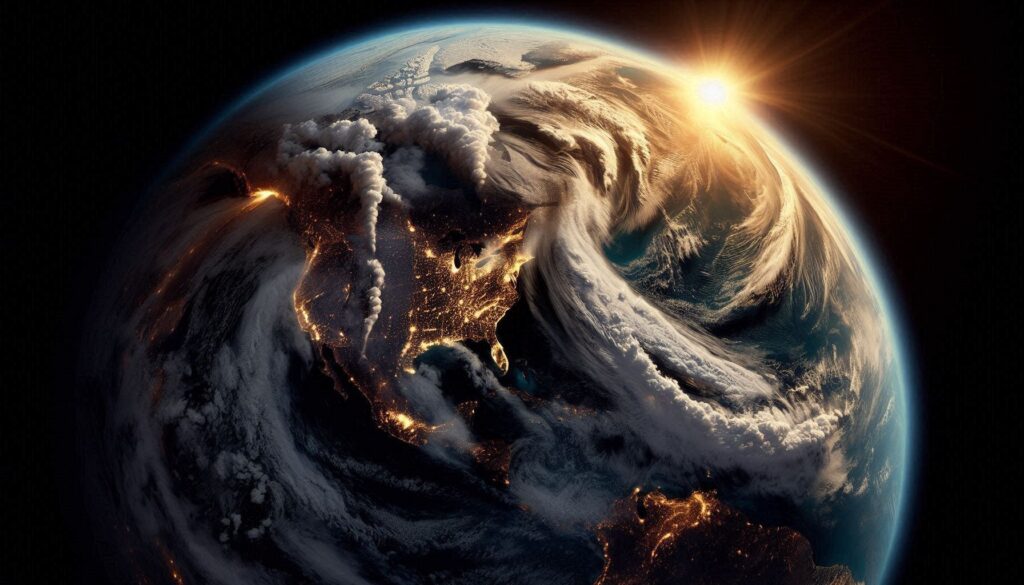
To fully understand Trump’s climate policy 2025, we must look at each rollback individually.
The US and the Paris Agreement
To understand what’s happening now, it helps to look back. The Paris Agreement, adopted in December 2015, is a landmark international treaty signed by nearly 200 nations. Its central goal is to limit global warming to well below 2°C above pre-industrial levels — and ideally to 1.5°C — by rapidly reducing greenhouse gas emissions worldwide.
The United States, one of the world’s largest greenhouse gas emitters, was a key signatory under President Barack Obama. However, during his first term, Trump withdrew the US from the agreement in 2017, arguing it placed unfair economic burdens on American industries. The US officially left in November 2020.
President Joe Biden reversed this decision on his very first day in office in January 2021, rejoining the Paris Agreement and committing the US to ambitious emissions reduction targets. The US formally rejoined in February 2021.
Then, on January 20, 2025 — just hours after his second inauguration — Trump signed Executive Order 14162, beginning the withdrawal process all over again.

Table of Contents
Trump’s Climate Policy 2025 – key points
Trump’s second term has brought a sweeping rollback of climate and environmental policies. Here is a factual breakdown of the major actions taken:
1. Withdrawing from the Paris Agreement
The Paris Agreement withdrawal marked one of Trump’s first acts upon returning to office in January 2025.
On his first day back in office, Trump signed an executive order titled “Putting America First in International Environmental Agreements”, directing the US Ambassador to the UN to immediately submit a written notice of withdrawal from the Paris Agreement. Under the agreement’s rules, the withdrawal takes effect one year after notification is received.
Trump stated on the day of signing: “I’m immediately withdrawing from the unfair, one-sided Paris climate accord rip-off. The United States will not sabotage our own industries while China pollutes with impunity.”
2. Declaring a National Energy Emergency
Trump declared a National Energy Emergency, a move aimed at dramatically expanding fossil fuel extraction across the United States. The declaration frames federal and state clean energy policies as threats to energy security, effectively reversing the direction of US energy policy from clean energy investment to fossil fuel production.
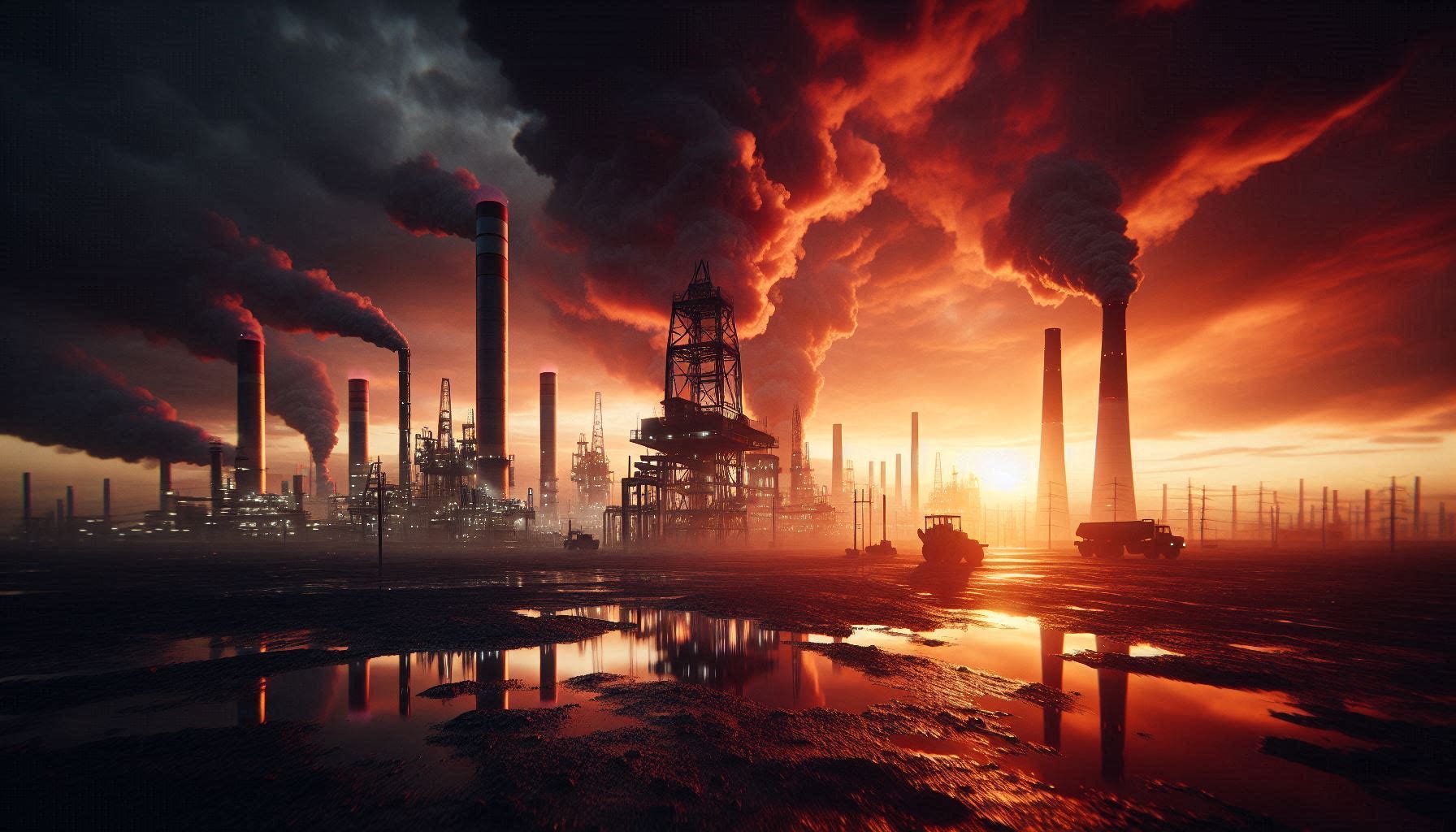
Trump’s fossil fuels policy prioritised oil, gas, and coal over clean energy investment.
3. The US Environmental Policy Rollback — What Was Reversed?
In just one year, Trump’s administration rolled back dozens of environmental rules, including:
- National air quality standards for particulate matter
- Limits on wastewater discharges from oil and gas facilities
- Regulations on power plant emissions
- Vehicle pollution standards
- Methane fee provisions that previously penalised excessive methane emissions from energy companies
During his first term, Trump rolled back over 100 environmental rules. Researchers estimated those reversals would dramatically increase greenhouse gas emissions over 15 years and lead to thousands of deaths from poor air quality.
4. Blocking Clean Energy Funding
The Trump administration halted billions of dollars in funding earmarked for clean energy projects across the US, including funds established under Biden’s Inflation Reduction Act (IRA). The IRA had incentivised unprecedented investment in US clean technology manufacturing. In Q4 2024 alone, over $16 billion was invested in new manufacturing capacity. After Trump’s policy shifts, the first quarter of 2025 saw $6.9 billion worth of clean tech manufacturing projects cancelled — the highest quarterly cancellation value on record.
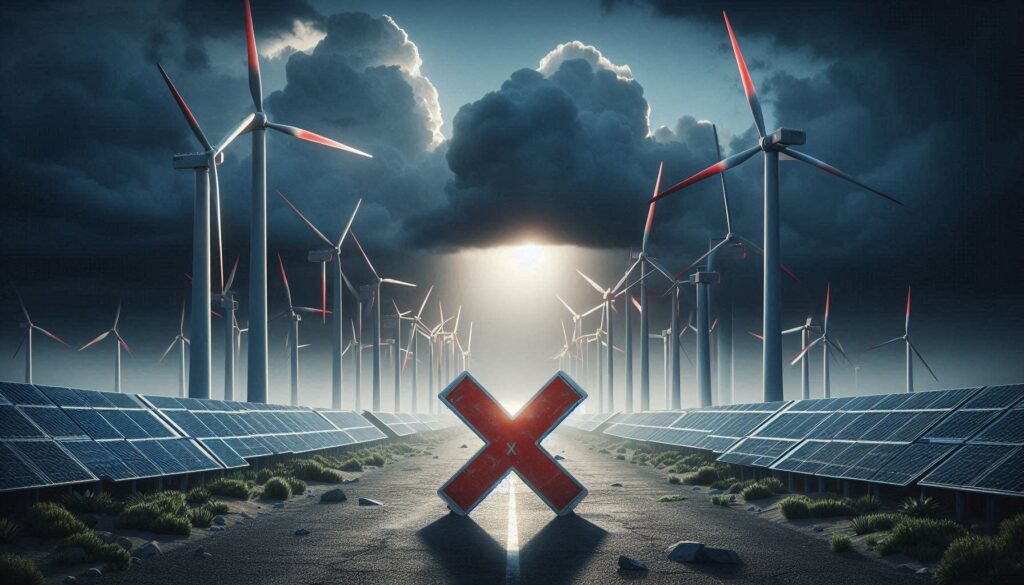
5. Halting Wind Energy Projects
Trump issued a moratorium on all new wind power projects on federal lands, pausing new leases and permits for both onshore and offshore wind farms. While solar and geothermal project reviews have since resumed, wind projects remain in limbo.
6. Cutting Climate Research Funding
The administration slashed billions of dollars in funding for climate research and erased scientific data from government databases. Tens of thousands of federal workers were abruptly fired from agencies including the EPA, the National Science Foundation, the Forest Service, and the National Oceanic and Atmospheric Administration (NOAA) — agencies central to climate monitoring and research.

7. Withdrawing from International Climate Finance
Trump rescinded the US International Climate Finance Plan, ceasing all financial commitments to help developing nations adapt to and mitigate climate change. The US also withdrew from the board of the Loss and Damage fund, which was designed to help poorer countries recover from climate-related disasters, and abandoned the Just Energy Transition Partnership — a flagship program helping developing countries move away from coal.
8. Absent from COP30
For the first time in history, the United States sent no representatives to the COP30 climate talks held in Brazil — a significant symbolic and practical blow to global climate negotiations.
Understanding Trump’s Climate Policy 2025
What Do Experts Say?
Views on the impact of Trump’s climate policies vary depending on the source.
Environmental and scientific organisations have been sharply critical. Rachel Cleetus, policy director for the Union of Concerned Scientists, warned that “the human and economic consequences of climate change will only grow if the US doesn’t do its part to limit warming.” She pointed to accelerating droughts, storms, heat waves, flooding, and sea level rise already being observed.
The Center for American Progress estimates that under Trump’s policies, US greenhouse gas emissions could rise up to 36% higher than current projections by 2035. Household energy costs are also projected to rise in 2030 and 2035 due to the delayed deployment of energy-efficient technologies.
Some economists and researchers take a more cautious view on the direct emissions impact. Luke Kemp of the Australian National University wrote in a commentary for Nature that withdrawal from the Paris Agreement “is unlikely to change US emissions” directly, since greenhouse gas emissions are not solely determined by international legal obligations. However, he noted it could significantly hamper global climate diplomacy and weaken the overall framework of international cooperation.
Supporters of Trump’s approach argue that the Paris Agreement placed disproportionate economic burdens on the US while allowing major emitters like China to continue expanding fossil fuel use. They argue that prioritising domestic energy production strengthens national security and keeps energy costs lower for American consumers and businesses.
What Does This Mean for the Rest of the World?
The United States is the world’s second-largest greenhouse gas emitter and has historically been the largest cumulative emitter of carbon dioxide. Its role in global climate efforts carries enormous weight — both practically and symbolically.
Following the US withdrawal, no other country has left the Paris Agreement. The European Union reaffirmed its commitment to reaching net-zero emissions by 2050. EU Commission President Ursula von der Leyen stated that the Paris Agreement “remains the best hope for all humanity” and that Europe would stay the course.
China, currently the world’s largest annual greenhouse gas emitter, has announced that its next Nationally Determined Contribution will cover all greenhouse gases — a significant policy expansion. However, critics note that China continues to build new coal power plants, making independent verification of its commitments essential.
The US withdrawal has created a leadership vacuum in global climate diplomacy. Some analysts warn it could embolden other countries to slow their own commitments, while others argue that the EU and China are increasingly stepping up to fill the void.
Is There Any Hope? What Is Still Moving Forward
Despite the federal rollback, climate action in the United States has not stopped entirely.
- US states like California, New York, and Washington continue to pursue aggressive climate targets independently, and California’s cap-and-trade system remains in operation despite federal pressure.
- Cities and local governments across the US are maintaining or even expanding their clean energy and emissions reduction programmes.
- Businesses and investors continue to invest in renewable energy and clean technology, driven by long-term market trends and consumer demand — though at a slower pace given policy uncertainty.
- Grassroots movements and Indigenous-led environmental campaigns continue to advocate for climate solutions at the community level.
Laurence Tubiana, CEO of the European Climate Foundation and one of the architects of the Paris Agreement, noted that international climate action “has proven resilient and is stronger than any single country’s politics and policies.”
A Critical Moment for the Planet
Trump’s climate policies represent one of the most significant reversals in US environmental policy in modern history. From withdrawing from the Paris Agreement for the second time to blocking clean energy funding and slashing climate research, the actions taken since January 2025 have fundamentally changed America’s relationship with global climate efforts.
Whether these policies ultimately damage the planet’s chances of staying within safe warming limits depends on many factors — including the actions of other nations, the pace of clean energy adoption globally, and the decisions made by future US administrations.
What is clear is that the stakes have never been higher. Scientists, world leaders, and communities on the frontlines of climate change are watching closely. The decisions made in the coming years — by governments, businesses, and individuals alike — will shape the climate of our planet for generations to come.
The debate around climate change 2025 has never been more important for our planet’s future. Trump’s climate policy 2025 will be remembered as one of the most significant environmental reversals in US history.
At HealthyEarth.Life, we believe that staying informed is the first step. Share this article, start the conversation, and let’s keep pushing for a healthier planet — together.
To know more about interesting topics like this, follow us and learn about another amazing topic, Winter Storm Warning 2026: Maps, Alerts, Advisories & Weather Safety
Sources: Congressional Research Service, European Parliament Research Service, NPR, Earth.org, Oxford Economics, Center for American Progress, Wikipedia — United States and the Paris Agreement
Disclaimer: This blog presents a factual and balanced overview of US climate policy changes. It includes perspectives from multiple sides of the debate and does not represent a single political viewpoint.
FAQs
Q1. What did Trump do to climate policy on his first day in office in 2025?
On January 20, 2025 — his very first day back in office — President Trump signed Executive Order 14162, beginning the formal withdrawal of the United States from the Paris Climate Agreement for the second time. He also signed executive orders to declare a National Energy Emergency, freeze clean energy funding, and halt all new wind energy projects on federal lands.
Q2. Why did Trump withdraw from the Paris Agreement again in 2025?
Trump argued that the Paris Agreement placed an unfair economic burden on the United States while allowing major emitters like China to continue expanding fossil fuel use. He stated that the agreement “sabotaged” American industries and prioritised foreign interests over US economic and national security.
Q3. How does Trump’s climate policy affect the rest of the world?
The United States is one of the world’s largest greenhouse gas emitters. Its withdrawal from the Paris Agreement and rollback of climate regulations weakens global climate diplomacy, creates a leadership vacuum in international climate negotiations, and could embolden other nations to slow their own commitments. Experts estimate US emissions could rise up to 36% higher than current projections by 2035 under Trump’s policies.
Q4. Is the Paris Agreement still active without the United States?
Yes. Nearly 200 countries remain signed to the Paris Agreement. Following the US withdrawal, no other country has left the agreement. The European Union, China, and other major economies have reaffirmed their commitment to staying in the Paris Agreement and continuing to work toward net-zero emissions goals.
Q5. What happened to clean energy funding under Trump’s climate policy 2025?
The Trump administration halted billions of dollars in clean energy funding, including grants established under Biden’s Inflation Reduction Act. In the first quarter of 2025 alone, $6.9 billion worth of clean tech manufacturing projects were cancelled — the highest quarterly cancellation value on record. Tax credits for electric vehicles ended in September 2025, and incentives for rooftop solar and heat pumps are set to expire by the end of 2025.
If you want to play games and earn online money, then click on the link below to play the M666 Game.